Author: dudidutaakbar@gmail.com
-
RTM-1 (Wednesday Morning) — Project Evaluation & Learning Notes
This page publishes the RTM-1 results for the Wednesday Morning class. The goal is transparency and academic improvement: every student can view their score and learn from the most common issues found in the submitted projects. Important Notes RTM-1 Score List (Wednesday Morning) No NIM Student Name RTM-1 Score Short Note (Title + Core Point)…
-
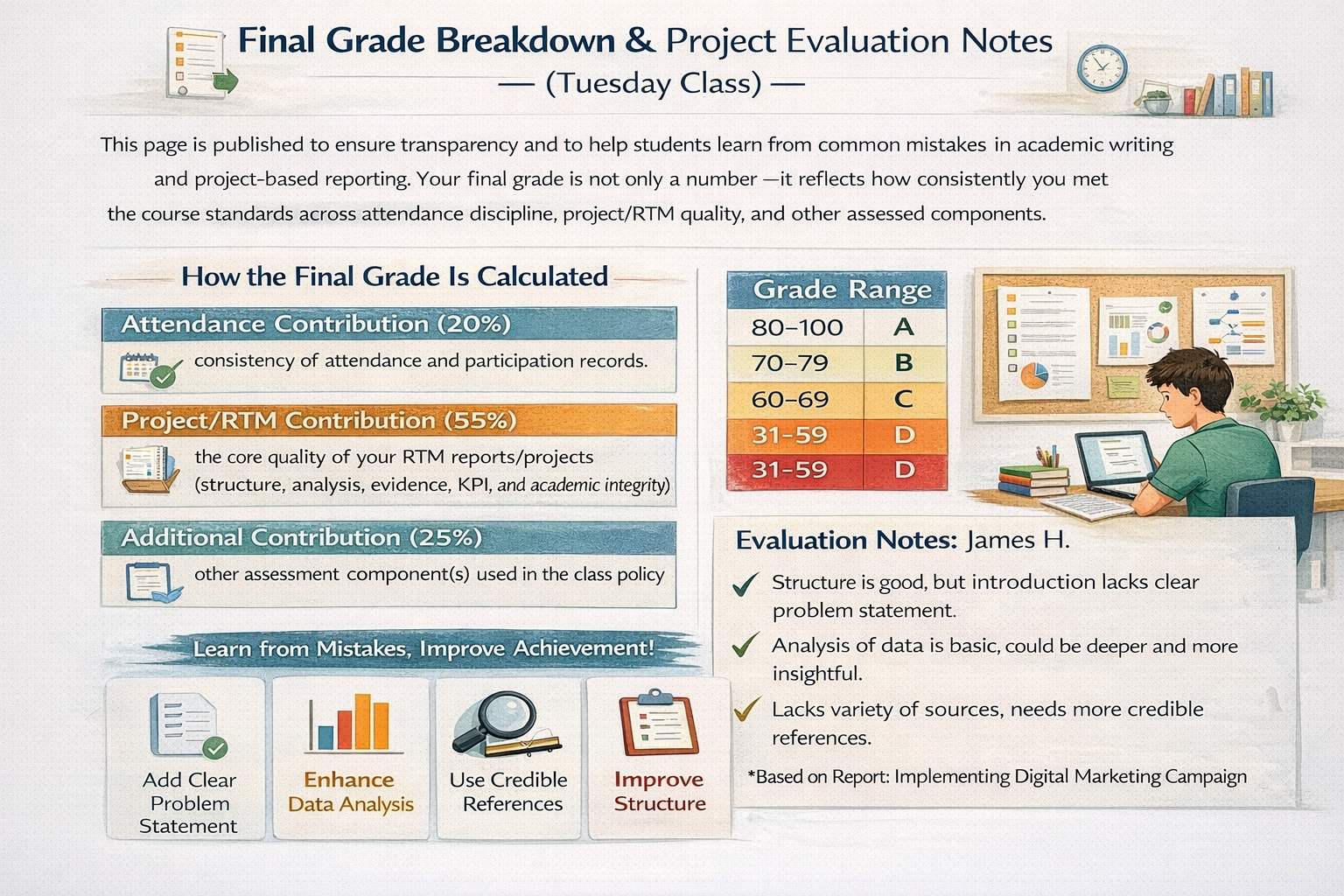
Final Grade Breakdown & Project Evaluation Notes (Tuesday Class)
This page is published to ensure transparency and to help students learn from common mistakes in academic writing and project-based reporting. Your final grade is not only a number—it reflects how consistently you met the course standards across attendance discipline, project/RTM quality, and other assessed components. How the Final Grade Is Calculated Final Score =…
-
Project Evaluation & Learning Notes (Tuesday)
RTM (Tuesday) — Summary of Performance and Common Writing Issues This page is published to support learning and transparency. The goal is not only to show scores, but to help every student identify what worked, what didn’t, and how to improve the quality of academic writing and project-based analysis in future assignments. Below is the…
-
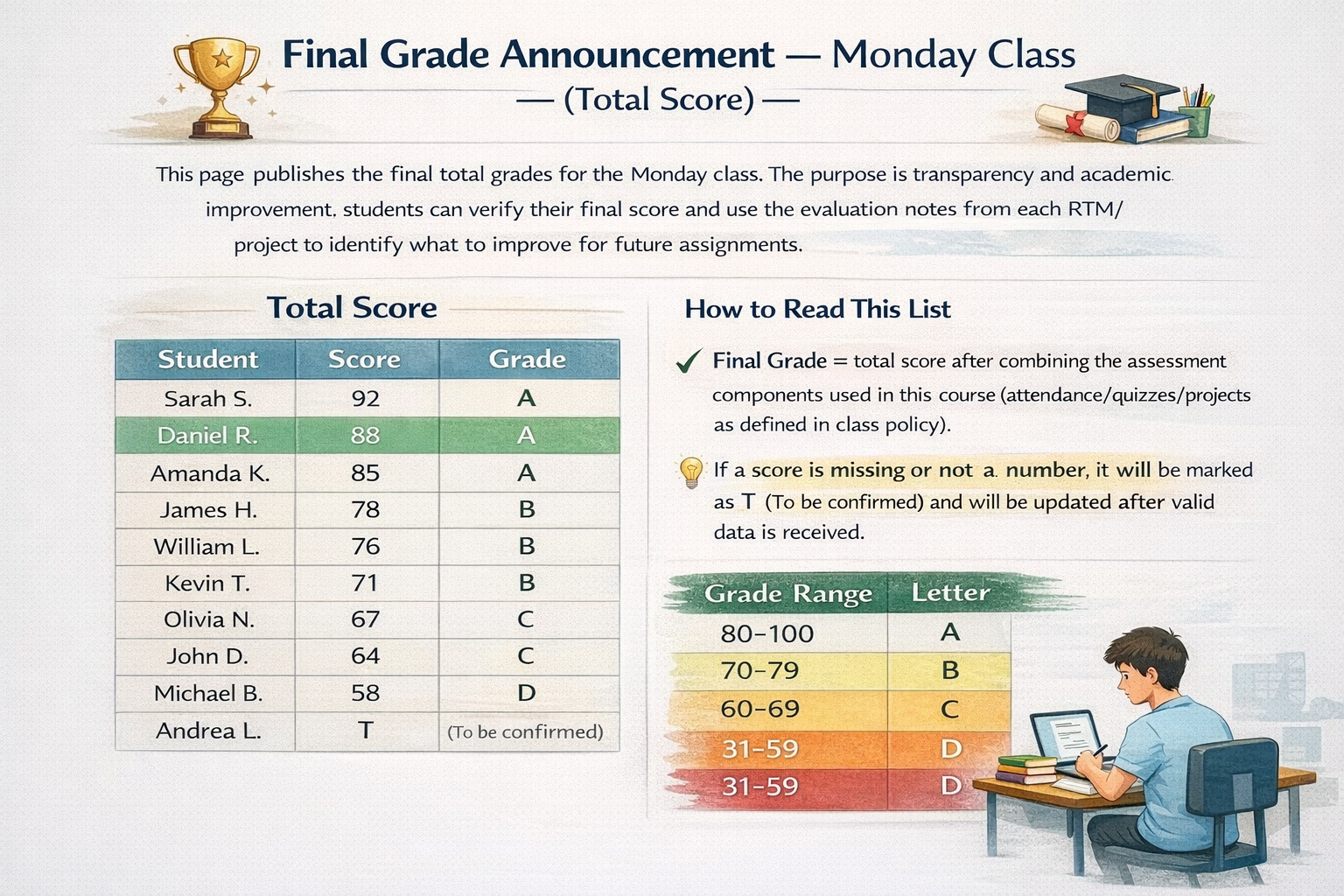
Final Grade Announcement — Monday Class (Total Score)
This page publishes the final total grades for the Monday class. The purpose is transparency and academic improvement: students can verify their final score and use the evaluation notes from each RTM/project to identify what to improve for future assignments. How to Read This List Final Grades — Monday Class (Total Score) No Student Name…
-
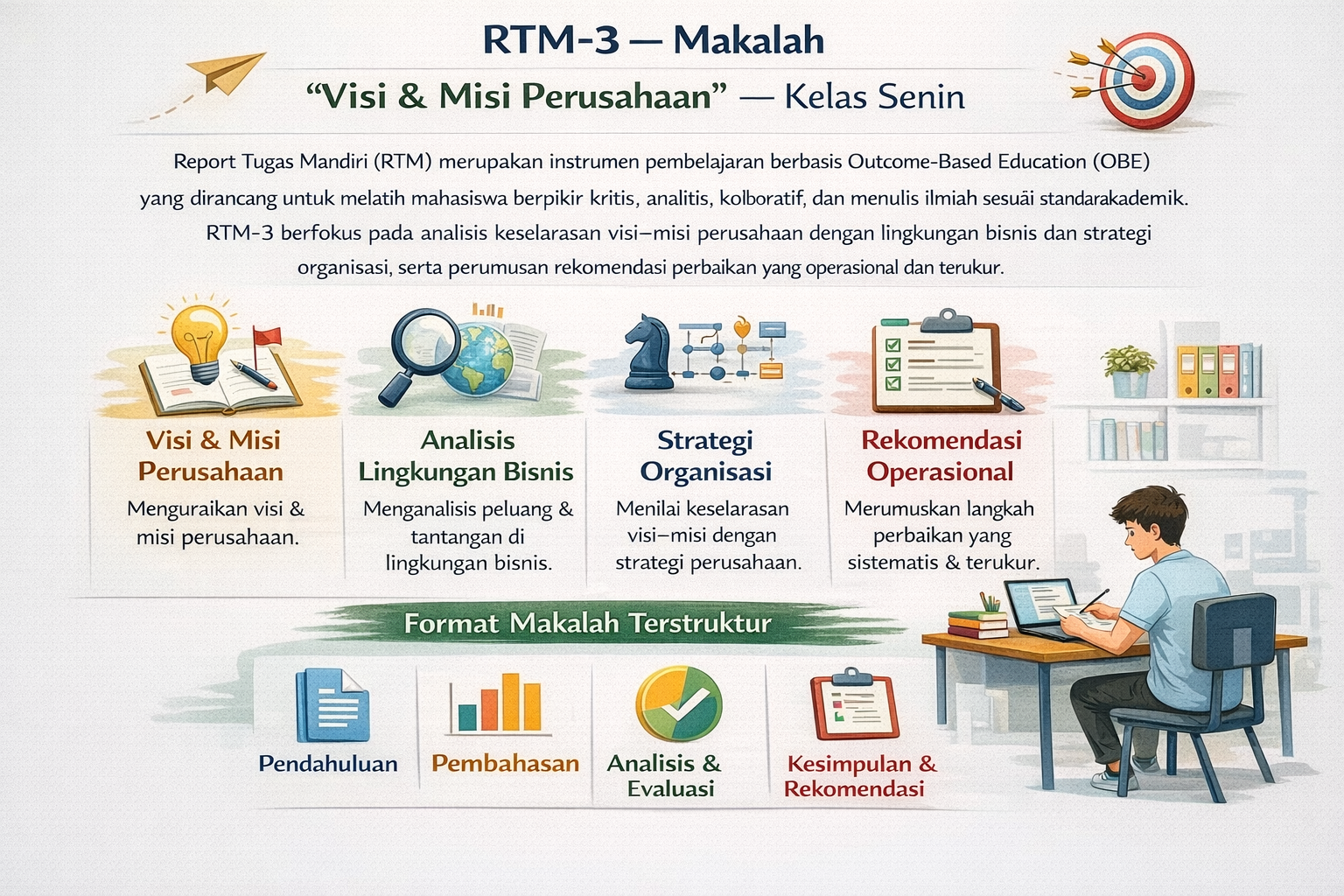
RTM-3 (Monday Class) — Project Evaluation & Learning Notes
Paper Title: “Company Vision & Mission”Course Format: Report Tugas Mandiri (RTM) — Outcome-Based Education (OBE) This webpage is published to ensure every student can see their RTM-3 score, understand the main reason behind the score, and learn how to avoid common mistakes in academic writing and analytical reporting. RTM is designed to train students to…
-
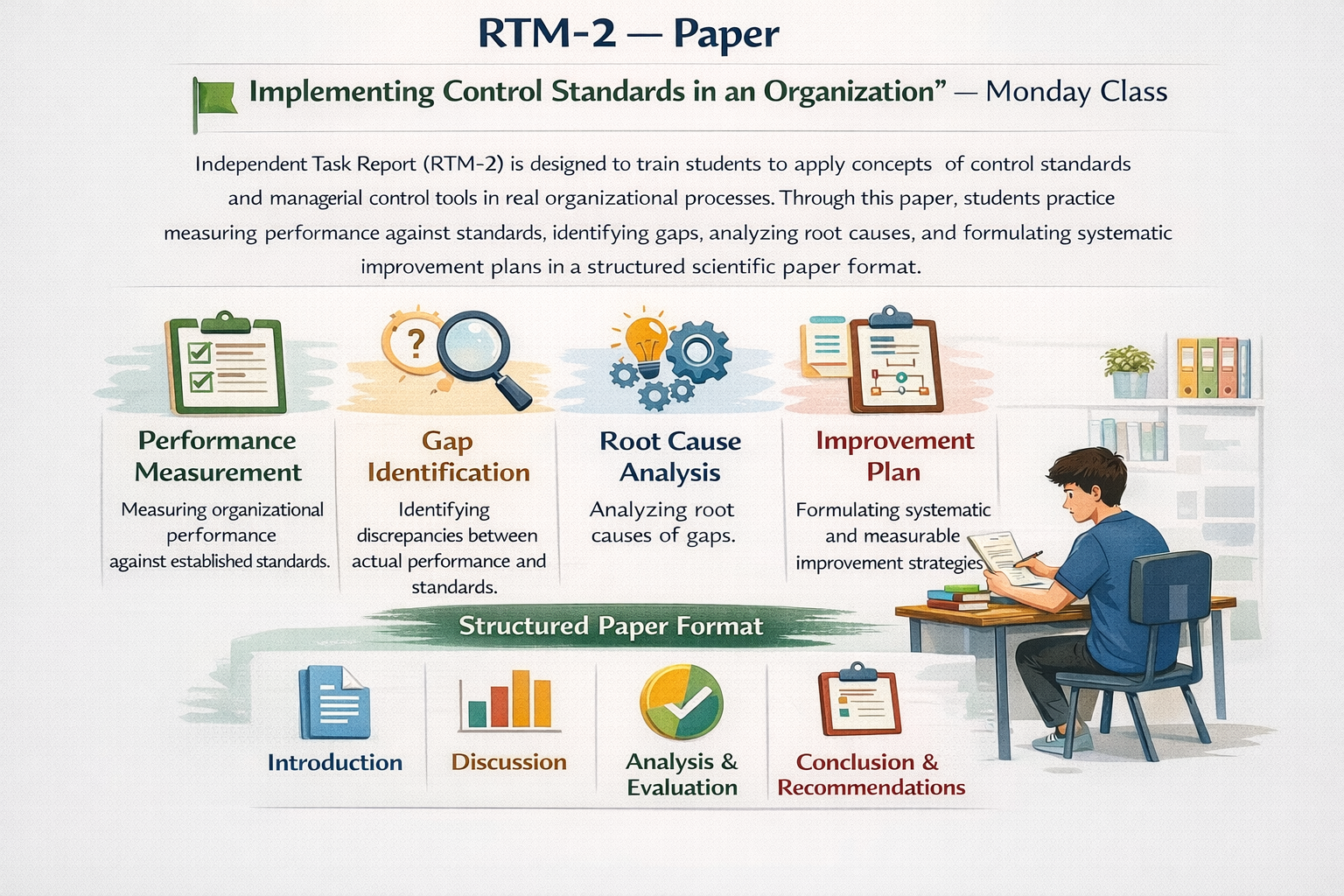
Paper: “Implementation of Control Standards in an Organization”
RTM-2 — Paper: “Implementation of Control Standards in an Organization”Class: Monday Class RTM-2 — Project Evaluation & Learning Notes (Monday Class) This page provides the official recap of RTM-2 scores and structured feedback to help students learn from common weaknesses and improve academic writing quality, analytical structure, and compliance with RTM requirements. 1) How to…
-
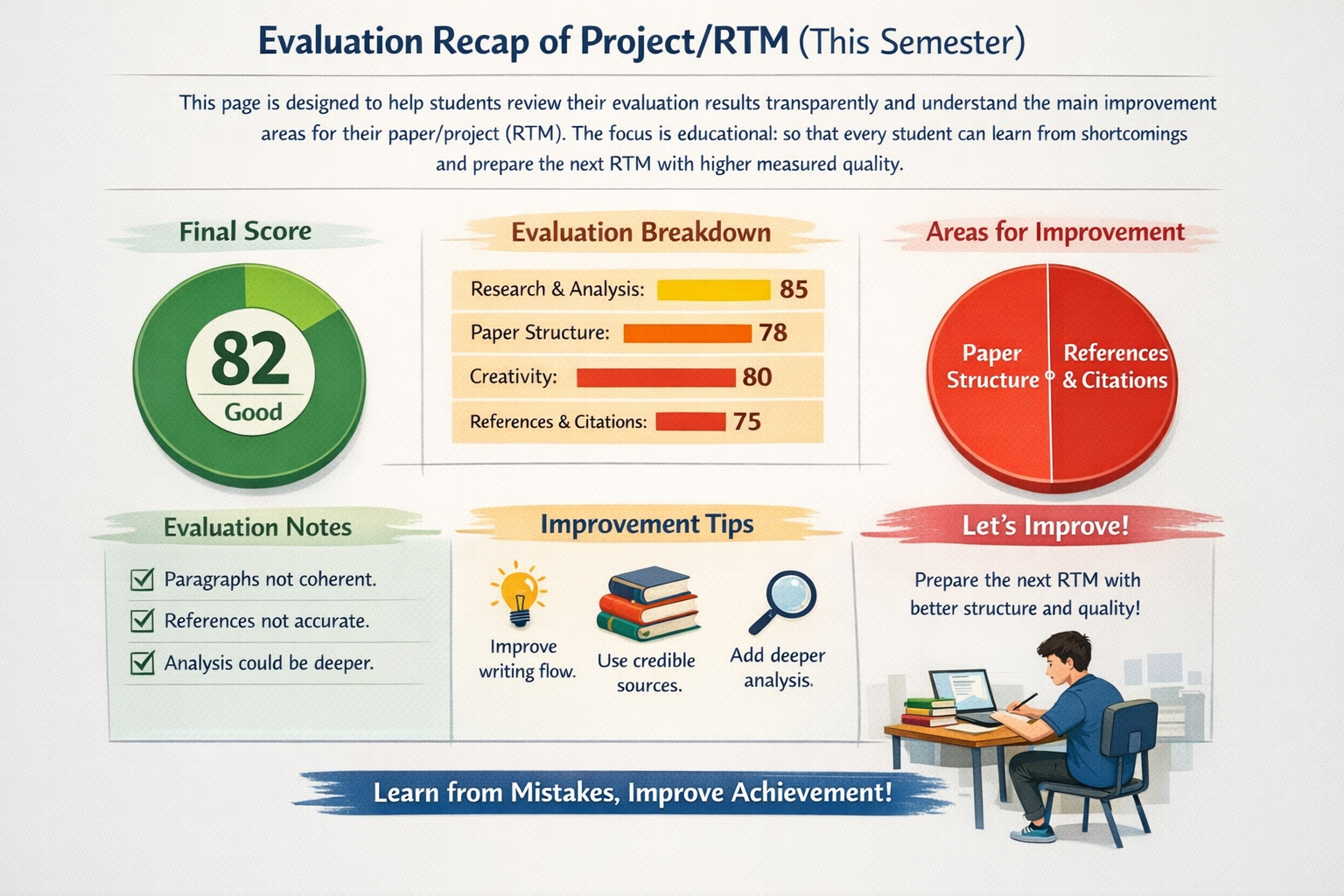
Project/RTM Assessment Feedback Page
This page is created to help every student see the assessment results transparently and understand exactly what needs to be improved in their paper/project (RTM). The goal is educational: so you can learn from common mistakes, strengthen your analytical structure, and produce a more measurable, evidence-based report in the next assignment. How to Read the…
-
Full Modeling The Wealth of Nations: Harga, Modal, dan Pertumbuhan
A. Output/Kekayaan Bangsa sebagai Nilai Produksi Tahunan Y≡∑i=1nPiQiY \equiv \sum_{i=1}^{n} P_i Q_iY≡∑i=1nVidenganVi≡PiQiY \equiv \sum_{i=1}^{n} V_i \quad \text{dengan} \quad V_i \equiv P_i Q_i B. Nilai Riil (Labour-Commanded Value) Vireal≈LicmdV_i^{real} \approx L_i^{cmd}Licmd≡PiwL_i^{cmd} \equiv \frac{P_i}{w} Interpretasi ringkas: komoditas bernilai “riil” tinggi bila dapat “memerintah” lebih banyak tenaga kerja; secara praktis dikira-kira sebagai harga komoditas relatif terhadap upah per…
-
Membaca The Wealth of Nations: Mengapa Kekayaan Bangsa Tidak Ditentukan oleh Emas, tetapi oleh Produksi
Ketika The Wealth of Nations terbit pada tahun 1776, Adam Smith sebenarnya sedang membongkar cara lama manusia memahami “kekayaan”. Pada zamannya, banyak negara masih meyakini bahwa kekayaan identik dengan cadangan emas dan perak. Smith menolak pandangan ini secara tegas. Bagi Smith, kekayaan suatu bangsa tidak terletak pada logam mulia yang disimpan, melainkan pada kemampuan masyarakatnya…
-
An Inquiry into the Nature and Causes of the Wealth of Nations,
Adam Smith Wealth of Nations (Public Domain) 👉 https://www.ibiblio.org/ml/libri/s/SmithA_WealthNations_p.pdf 1) Ide Besar Buku: “Wealth” = Kapasitas Produksi Tahunan & Pembagiannya Smith menekankan bahwa kemakmuran masyarakat terutama tercermin pada nilai tukar (exchangeable value) dari seluruh produksi tahunan. Dalam bahasa akuntansi makro yang sangat sederhana, ide ini bisa ditulis sebagai identitas:Y≡∑iPiQiY \equiv \sum_i P_i Q_i di mana…